Jomo Kenyatta
Jul 01, 2026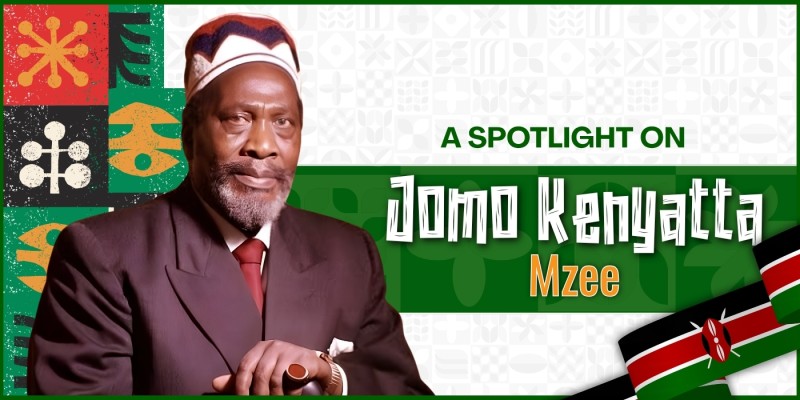
"Our children may learn about the heroes of the past. Our task now is to make ourselves architects of the future."
In the crucible of 20th-century anti-colonial resistance, few figures loomed as large or as formidable as Johnstone Kamau Ngengi, the man the world would come to know as Jomo Kenyatta. Revered as Mzee (the Elder) and remembered as the founding father of Kenya, Kenyatta was a towering intellectual, a sophisticated cultural anthropologist and a radical political strategist. His very name - Jomo, meaning "Burning Spear" - captured the fierce energy he brought to dismantling the structures of British imperial rule. From his early days as a political organiser in London to his controversial imprisonment by colonial authorities, Kenyatta’s life was a masterclass in calculated defiance. In this expansive Leadership Spotlight, we examine the mechanics of a visionary who transformed a fractured colony into a sovereign republic.
Intellectual Weaponisation of Culture
Kenyatta understood early on that colonialism's most destructive weapon was its attempt to erase African identity. In 1938, while studying under the legendary anthropologist Bronislaw Malinowski at the London School of Economics, Kenyatta published Facing Mount Kenya. It was not merely an academic study of the Gikuyu people; it was a sophisticated political manifesto. By proving that African societies possessed complex, democratic governance and social structures long before European arrival, Kenyatta stripped the British of their "civilising mission" justification.
"The Europeans said, 'We want to give you culture.' But we had a culture of our own. We had a system of government... we had everything that a human society requires."
The Kapenguria Six and the Power of Martyrdom
In October 1952, as the armed Mau Mau rebellion pushed British colonial forces to the brink, the colonial administration declared a State of Emergency. Seeking to crush the political head of the liberation movement, they arrested Kenyatta and five other leaders—the legendary Kapenguria Six.
Though Kenyatta maintained a strategic distance from the guerrilla tactics of the Mau Mau, the British staged a highly politicized show trial, convicting him on fabricated charges and sentencing him to seven years of hard labor in the remote, arid region of Lokitaung. This backfired spectacularly. Instead of silencing him, his imprisonment transformed Kenyatta into an international symbol of African martyrdom. The slogan "Free Kenyatta" became the rallying cry that united diverse ethnic groups across Kenya under a single banner.
"Harambee": Pulling Together as Sovereign Infrastructure
Upon his release and subsequent ascension to power in 1963, Kenyatta faced the monumental task of uniting a nation deeply scarred by engineered colonial divisions and the trauma of war. His solution was "Harambee" (Swahili for "Let us pull together").
Harambee was transformed from a simple community work chant into a national guiding philosophy and political economy. It encouraged community-based, self-help resource mobilization, allowing citizens to collectively build schools, medical clinics, and roads without relying on foreign aid or state bureaucracy. It was a radical assertion of local self-reliance.
"We must pool our resources and work together for the common good. If we do not pull together, we shall fall apart."
Economic Pragmatism and Agrarian Sovereignty
While many post-independence African leaders favored rapid industrialization or alignment with Eastern Bloc socialist models, Kenyatta pursued a highly deliberate agrarian-based economic policy. He championed the "Uhuru na Mashamba" (Freedom and Land) strategy. He systematically oversaw the peaceful transfer of millions of acres of fertile highland farm spaces from white settler hands back to indigenous Kenyan smallholders and cooperatives. By prioritizing agricultural productivity, Kenyatta ensured that Kenya maintained economic stability and food security during the volatile post-independence transition.
Complexities of a Giant
No leader of Kenyatta’s magnitude exists without historical debate. His administration faced criticism over the centralization of executive power, unresolved land distribution disparities in the Rift Valley, and deep political rivalries—most notably with his initial Vice President, the leftist Pan-African giant Oginga Odinga. Yet, even his fiercest critics acknowledge that Kenyatta’s steady hand prevented Kenya from descending into the catastrophic civil conflicts that plagued other newly independent African nations in the 1960s.
The Blueprint for Tomorrow
Jomo Kenyatta’s enduring legacy is his unshakeable belief in the intellectual and operational capacity of the African person. He proved that true liberation requires navigating the complex realities of international geopolitics while keeping your feet firmly planted in the soil of your ancestral home. As we look toward building a fully self-reliant and unified continent, Mzee’s final charge remains a guiding light for the next generation of architects:
"Many people forget that freedom is not a gift given on a silver platter. It is something you have to fight for, something you have to protect, and something you have to build every single day."